Unlock Your Brain’s Power
Explore Yourself
Online Learning Style Quiz: VARK Learning Style Assessment
 A Practical Guide to Learner Preference Inventories and Their Benefits
New Updates
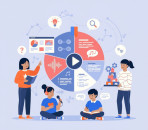
VARK Explained: A Practical Guide to Multimodal Learning That Works
Why This Framework Matters for Teachers, Students, and Lifelong Learners
Educators and self-directed learners often face a common challenge: translat...

VARK Assessment: A Comprehensive Guide to Understanding Learning Preferences
What Is VARK and Why Does It Still Matter
VARK is a straightforward framework that helps people notice the different ways they prefer to take in, pro...

Study Smarter for Exams: A Strategic, Research-Backed Guide
Why Mastering Exam Preparation Changes Outcomes
Great scores rarely happen by accident, and sustainable success grows from a deliberate plan. Effecti...
Online Learning Styles Test
Get StartedDiscover Your Learning Style With Quiz and Study More Effectively
People absorb, encode, and retrieve information through a mix of sensory channels, cognitive strategies, and metacognitive habits. Rather than a one‑size‑fits‑all script, effective learning recognizes variability in attention, memory, motivation, and prior knowledge. Research in cognitive psychology highlights distributed practice, retrieval, and elaboration, yet it also shows that relevance and context matter. When learners can connect new material to authentic problems, transfer improves and confidence grows.
Across classrooms and training programs, instructors design activities that address multiple modalities without locking anyone into a narrow box. Many educators still debate definitions, yet discussions about learning styles often spark curiosity across classrooms. The practical takeaway is to use variety, invite reflection, and encourage experimentation with methods that stick. Designers try to blend explanations, visuals, demonstrations, and quick checks so material clicks in more than one way. When teams build courses, attention to learning preferences can guide examples, pacing, and sensory cues. This kind of tuning helps beginners maintain momentum while providing depth for advanced participants.
- Alternate concise explanations with concrete demonstrations and brief practice.
- Use retrieval prompts to strengthen memory and reveal gaps rapidly.
- Offer choices among note‑making, sketching, or speaking summaries.
- Encourage reflection on what truly improved recall after a session.
As facilitation evolves, coaches consider group dynamics, available tools, and assessment goals. Mentors also consider different types of learners as they mix group dialogue with hands‑on labs. With thoughtful variety, people discover reliable techniques they can reuse under pressure.

Benefits and Evidence: Why Tailored Learning Makes a Difference
Well‑scaffolded instruction balances a common core with options that respect individual pathways. Programs that offer structured choices often see higher engagement, steadier persistence, and better transfer of skills to new contexts. When learners practice monitoring their own understanding, they become more strategic and resilient in the face of difficulty. Capturing a snapshot of current habits can be useful when handled with nuance and humility. In program design, a short learning style assessment can kick off reflection without pigeonholing people. The aim is to open dialogue about tactics, not to stamp permanent labels.
Teams sometimes complement observation with short checklists and guided prompts. Some departments adopt a concise learning style inventory to surface habitual patterns before skills training. Insights from those prompts should feed into action plans that emphasize experimentation and iteration. Many schools also explore strengths from broader ability profiles. Other instructors align projects with the spirit of a multiple intelligences test, emphasizing strengths while still developing weaker modalities. Used judiciously, these tools spur metacognition and more targeted practice across diverse tasks.
- Translate insights into specific study actions for the next unit.
- Avoid deterministic labels; treat results as starting hypotheses.
- Blend high‑utility strategies like retrieval with preferred modalities.
- Track outcomes so choices evolve with evidence over time.
Models and Debates: Comparing Approaches and Using Them Wisely
Over the years, multiple frameworks have attempted to describe how learners engage with content and tasks. One famous four‑modalities framework, often abbreviated as VARK, proposes channels for receiving and expressing information. Advocates value its simplicity, while critics warn against rigid categorization or ignoring task demands. Educators use surveys, observations, and reflection prompts to start metacognitive conversations. In some workshops, a brief VARK questionnaire serves as a neutral icebreaker that leads to strategy sharing and goal setting. The discussion that follows typically matters more than the score itself.
| Framework | Core Idea | Best Used For | Cautions |
|---|---|---|---|
| Four‑modality model | Highlights sensory channels for input and expression | Starting a conversation about study tactics | Avoid fixed labels; match methods to tasks |
| Kolb cycle | Experience, reflection, concepts, experimentation | Designing iterative practice and projects | Ensure time for all phases, not just doing |
| Dual‑coding emphasis | Combine words and visuals to boost memory | Explaining complex processes and systems | Quality beats quantity; avoid cluttered visuals |
| Metacognitive strategy mix | Plan, monitor, and evaluate study choices | Self‑regulated learning and test transfer | Teach how to measure effectiveness honestly |
Implementation matters more than labels, so instructors connect activities to clear outcomes and feedback cycles. Programs that reference a VARK assessment should pair it with context, nuance, and open reflection about limits. When learners see models as menus rather than mandates, they combine methods that accelerate growth.
From Insight to Action: Study Plans, Practice Routines, and Teaching Moves
Turning reflection into concrete routines changes results on quizzes, projects, and performance tasks. Introductory workshops may open with a light learning style quiz to spark engagement before deeper skill building. After that warm‑up, mentors guide people to test strategies that align with real task demands.

To make choices stick, learners need deliberate practice with feedback and spaced repetition. Learners often craft rehearsal plans that are tailored to the demands of a how to study test so strategies become concrete. Over time, logs and quick check‑ins reveal which tactics deliver the most reliable gains. Reflection anchors the entire process, especially when stakes are high. A weekly retrospective helps you examine what learning style feels effective for a given task without boxing yourself in. With that clarity, you can switch tools confidently when the context changes.
- Set a specific goal for each study block and define success beforehand.
- Use retrieval practice first, then add elaboration and mixed exercises.
- Convert notes into diagrams or explanations to another person.
- Review performance data and adjust the next session accordingly.
Digital, Remote, and Workplace Contexts: Designing for Access and Impact
Modern programs stretch across classrooms, laptops, phones, and shop floors, so flexibility is essential. Remote courses benefit when designers address learning styles online learning considerations through multimedia, captions, and tactile kits. The aim is to sustain presence, clarity, and community even when people learn from different locations.
Hybrid curricula benefit from varied pathways that keep goals aligned while respecting autonomy. Curriculum maps can also acknowledge different types of learning styles while keeping outcomes cross‑modal. By tying each choice to an evidence‑based practice, teams reduce friction and amplify results. On‑the‑job training thrives when progress is visible, and momentum is shared with mentors. New professionals gain confidence by journal prompts aimed at identifying your learning style within real projects. When reflection is paired with feedback, learners upgrade techniques quickly and sustainably.
- Offer transcripts, alt text, and low‑bandwidth options for access.
- Blend synchronous touchpoints with asynchronous deep work.
- Provide small kits or simulations to replicate hands‑on practice.
- Track outcomes in dashboards that inform the next sprint.
Online Learning Styles Test
Get StartedFrequently Asked Questions
-
How should I start tailoring my study routine without overcomplicating it?
Begin by choosing one unit and testing two different methods, such as retrieval practice versus concept mapping. Track how long each takes and what you can recall two days later, then keep the tactic that produced clearer recall. Small, repeatable experiments beat big plans that never launch.
-
Are modality labels enough to guide instructional design?
Labels can open a conversation, but task demands and outcomes should drive strategy. Focus on what the skill requires: sequence memory, spatial reasoning, or procedural fluency, and align activities accordingly. Variety helps ensure transfer and reduces overreliance on a single channel.
-
How do I know a strategy is working for me?
Use delayed retrieval checks to measure what you can produce without cues after time has passed. Compare accuracy and speed across methods and keep a brief log of results. If a tactic fails under time pressure, adjust or replace it with one that holds up.
-
What’s a good way to adapt when a course changes format midstream?
Identify the core objectives and map them to the tools available in the new format. For each objective, pick a practice that fits the medium, such as discussion boards for argumentation or simulations for procedures. Maintain feedback loops so you can correct course quickly.
-
How can teams implement personalization without fragmenting the syllabus?
Set shared milestones and rubrics, then offer multiple pathways to reach them. Provide template routines that students can customize while keeping assessments aligned. Regular check‑ins keep everyone moving toward the same destination with methods that suit their context.